
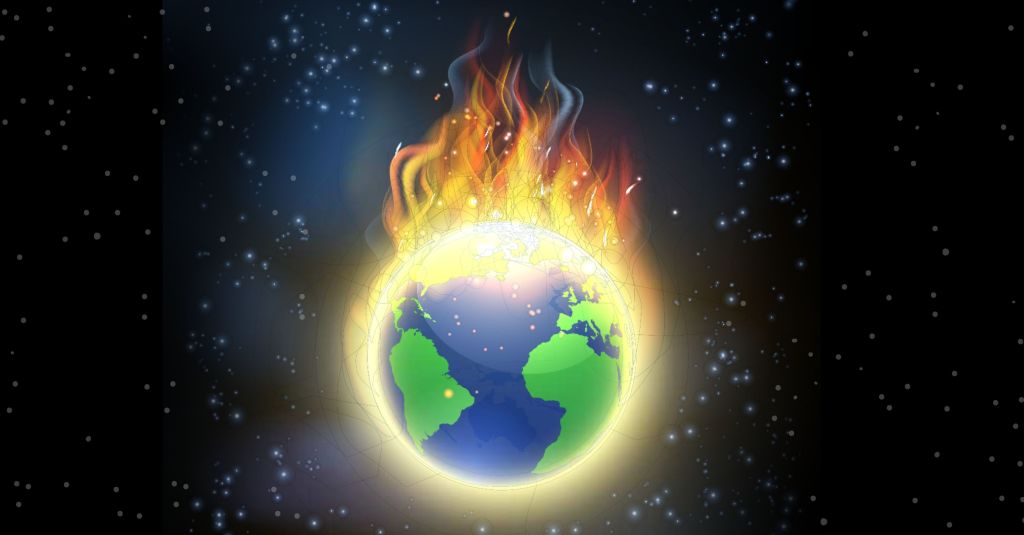
Hundreds of delegates have flown to Egypt (a military dictatorship) for COP 27 to mark their own homework on their achievements from COP 26. The overall grading is an “F”, with only 20-something out of the 193 countries in the UN countries coming up with an updated plan to tackle the climate crisis.
Greta has hit it on the head again, bhla, bhla, bhla. What we know is that the human species must act in concert to ensure that global warming does not exceed the tipping point of 1.5 degrees above the pre-industrial average. What continues to baffle me is that Governments globally spent in excess of $10.0 trillion in supporting companies and communities during Covid but cannot muster up a few trillion to break the back of the existential threat of the climate crisis.
Are there reasons to be hopeful, well, the answer is, not really, that is despite Guterres’s passionate plea to the global community, in particular to the developed nations to act. Acting means delivering at least the $100 billion a year promised to underdeveloped and developing countries to transition from and mitigate the consequences of fossil fuels. In addition, a rapid pivot to renewables, technology transfer, a windfall tax on fossil fuel companies and carbon pricing which will encourage energy transition and provide additional revenue to invest in carbon-free energy. Countries and in particular, the US need to break the stranglehold that “Big Fossil” has on the political establishment. The principle is clear, it means that developed counties that inadvertently or otherwise caused the climate crisis need to support those developing nations that are suffering from it.
What is clear from scientists, is that this is the make-or-break decade for climate action. At this point, the world is looking into the abyss with a projected rise in temperature of 3.0 degrees by 2050. There we have it, Armageddon but not as we know it, but slower and more painful. This will be seen through the rise of sea levels, the melting of ice caps and glaciers, floods in Pakistan, forest fires, destruction of life-supporting ecosystems and disrupted food production. What we are witnessing is the complete reversal of an often-lauded achievement that we as a world are so proud of; we embraced an economic model based on growth that has taken billions out of relative poverty defined as someone earning $2.15 per day, yippee. Just to be clear this modest goal has been achieved by a war on nature, plundering the natural resources of poorer nations which include formerly colonised countries and by exploiting the same country’s human assets.
The consequences of the failure to act decisively on the climate crisis will be the mass movement of people across continents, causing huge economic and political disruption, the effects of which are unimaginable.
Greta describes the gathering in Egypt as another greenwashing jamboree and I am inclined to agree with her. Though it seems this is the best our elected and non-elected representatives can offer at this time, unfortunately, time is what we have very little of.
The visionary report published by the Brandt Commission in 1980 on global economics titled North-South: A Programme for Survival, highlighted the need to reduce dependence on fossil fuels: “Important harm to the environment and depletion of scarce natural resources is occurring in every region of the world, damaging soil, sea, and air. The biosphere is our common heritage and must be preserved by cooperation – otherwise, life itself could be threatened” Brandt Commission 1980
The report also provided a template to improve economic and social equality globally. The recommendations of this ground-breaking report covered and suggested solutions to issues from hunger, poverty, women, aid, security, energy, and the environment, all of which remain largely unfulfilled.
The question is why, here are a few thoughts, self-centred economic nationalism, shareholder value-based globalisation, unrestrained free market economics, exploitation of the resources of poorer countries, financialisaton of economies, failure to embrace the virtuous circle of foreign aid, and the enigma that there is such a thing called the “human race”
Let me know what you think in the comments below 👇
Suneil Shamra


Leave a Reply